Before the Itinerary
In December 2016, heading into January 2017, I was a sophomore in college, and travel meant one thing to me: exploring the world and escaping real life for a little while.
At that age, travel wasn’t about logistics or planning. It was about seeing new places through the lens of different cultures, trying food you couldn’t pronounce, and stepping into a version of life that felt bigger than your day-to-day routine. Vacation was an escape—and a joyful one.
I had no fear about traveling. My mom did a good job teaching us early on that just because something was new or uncertain didn’t make it scary. It made it exciting. So when we booked a trip to Costa Rica, I didn’t hesitate or question a single thing.
Why would I?
It was vacation.
I trusted everything would just work out. I truly believed trips came together easily—like some kind of magical puzzle where all the pieces fell into place with minimal effort. Flights, lodging, transportation… I assumed it all happened quietly behind the scenes.
I didn’t plan the trip at all. My mom handled everything. My only responsibility was to show up and soak it all in.
And honestly, that felt like how travel was supposed to be.
Costa Rica Through a College-Aged Lens
What stood out to me most about that trip were the places we stayed. Even then, accommodations felt like part of the adventure—and my mom was always good at hiding the wow factor until the last possible moment.
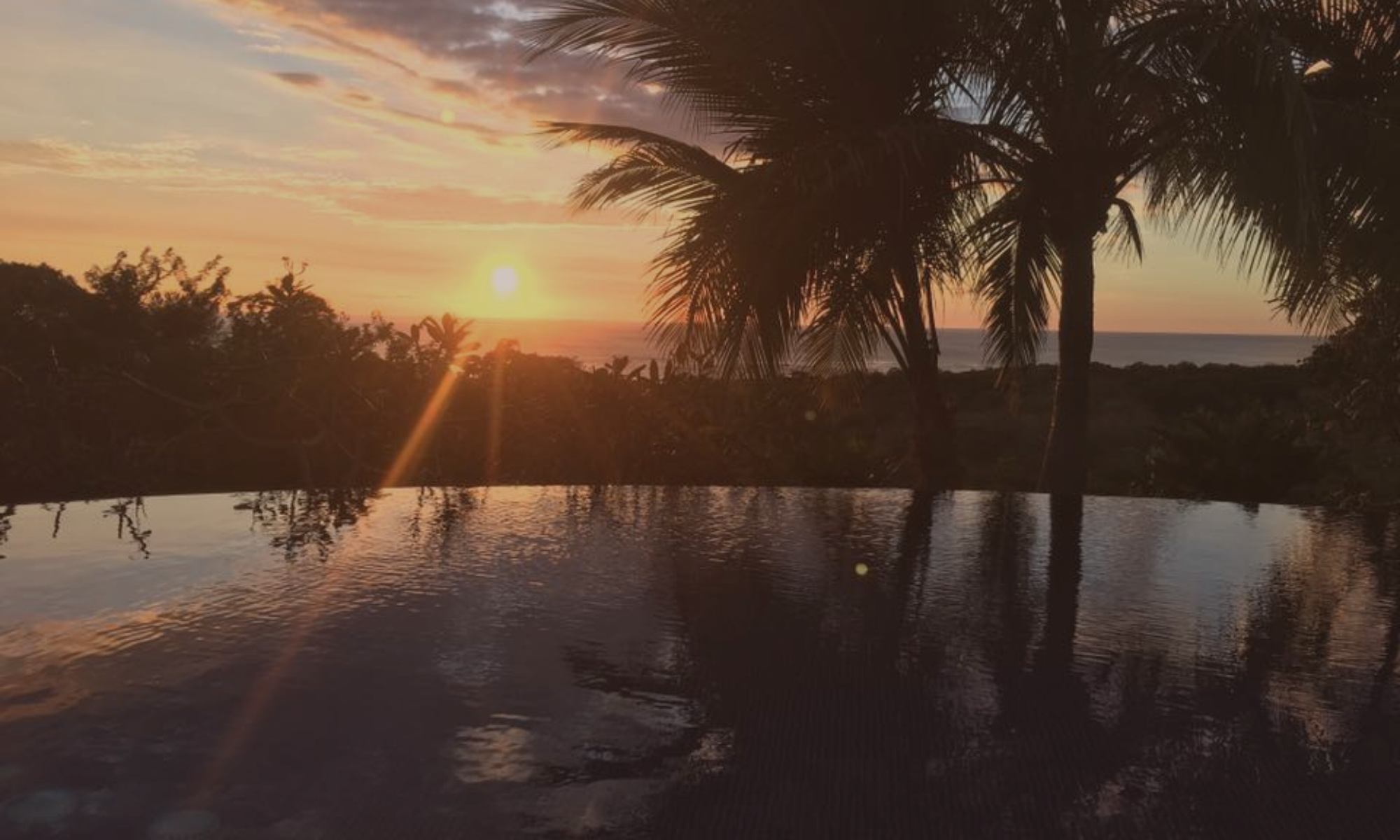
The first place we stayed was a literal tiki hut tucked into the rainforest. Not rustic in a questionable way—picture-perfect infinity pool overlooking the jungle kind of way. I was traveling with my three younger siblings, and I brought my best friend from high school along with us. That tiki hut was home for the first half of the trip.
The moment we arrived and saw where we were staying, all logic went out the window. We didn’t even unpack. We jumped straight into the pool, staring around like, is this actually real life? I remember being so excited to pick a bed in the loft under the thatched hay roof. It felt adventurous. Exotic. Exactly how I imagined Costa Rica should be.
Then night fell.
That’s when we learned the downside of sleeping in a rainforest tiki hut.
When it came time for bed, we discovered a praying mantis casually hanging out on one of the beds. What followed was a lot of screaming, frantic running down the stairs, and the immediate realization that the dreamy loft we couldn’t wait to sleep in… was no longer happening.
Within minutes, sleeping arrangements turned into a full negotiation. My parents retreated to their sealed, air-conditioned room. My best friend Kristina and I claimed the couches—which honestly felt like a win.
As the days went on, the surprises kept coming. Massive frogs swam in the pool at night. The pool heater didn’t work, and trying to communicate that was its own adventure. Kristina’s Spanish helped un poco, but not enough to make it warm. Toward the end of our stay, we found a scorpion under the couches in broad daylight, which explained why no one was sleeping particularly well.
If I had to guess, not much sleep happened there.
But wow—memories that will last a lifetime.
The second half of the trip took us to a completely different part of Costa Rica. Less rainforest, more open landscape. And the place we stayed there felt downright luxurious compared to what we were used to. Floor-to-ceiling windows looked out over the hillside toward the ocean. Air conditioning. No bugs. No surprise creatures sharing our living space.
We didn’t have howler monkeys waking us up in the morning, either.
I also remember how we actually found the tiki hut when we first arrived—following a random guy up a hill and hoping we were headed in the right direction. We didn’t have Google Translate. It was a lot of talking loudly, slowly, and showing pictures on our phones, trusting it would somehow work out.
And as a kid traveling, I believed that’s just how trips happened. Everything magically came together. And if something didn’t? I assumed there would be a solution. Effortless. Automatic.
The Questions I Never Asked
Looking back now, I don’t know how my mom chose where we ate. Or how she knew how much money to bring in local currency. I don’t know where everything was booked or how she decided what was worth the cost.
I can’t imagine the dollar signs she must have seen with every unknown purchase we asked for. Every excursion. Every meal. Every “can we do this too?” At the time, money didn’t feel real—it was just background noise to vacation.
And if I’m honest, we weren’t very grateful then. Not intentionally. Just young.
I expected hiccups. With my family, that was a given. Travel never felt perfectly smooth, but it also never felt dangerous. Nothing life-or-death crossed my mind—just small problems that I assumed would magically get solved.
And somehow, they always were.
What I understand now is how much went into making it feel that way.
She was working full time while planning a trip that was still fairly unheard of where we came from. Costa Rica wasn’t an easy, familiar vacation. It was ambitious. And she planned it for four kids, plus an adopted daughter—who in practice was really just my best friend tagging along.
There were rental cars to figure out—big enough to fit all of us. Decisions about insurance. Questions about whether it was okay to drive through water on unfamiliar roads. Language barriers. Safety concerns. Moments where she didn’t know the answer and didn’t have a perfect backup plan waiting.
It was fly-by-the-seat-of-your-pants travel in the best way she could manage at the time.
What I Understand Now
I understand now how much that trip cost.
Not just in dollars—but in weight. In decisions. In quiet second-guessing.
Every complaint we made was probably taken to heart. Wondering if it was worth the money. Wondering if the littles would remember any of it. Wondering if this experience would shape us into the people we’d become.
At the time, I couldn’t see that. I didn’t understand what it meant to invest in experiences where the return isn’t immediate or guaranteed. Culture at that level—the kind you feel, not just see—was invisible to me then.
If I planned that same trip now, it would look different. But interestingly, so much of it would stay the same.
Two locations was genius. One rainforest, one beachy. One outdoor adventure stay and one luxury hillside home with a view. The contrast is what made the trip memorable.
Today, I’d be more strategic. I’d research restaurants ahead of time. I’d understand the rental car logistics better. I’d prepare for language barriers and currency exchange. I’d know the must-sees versus the “don’t make this mistake” moments.
But the non-cookie-cutter feel? The sense of adventure? The willingness to step into the unknown?
That came from trips like this one.
She planned Costa Rica solely on Google and hope—investing an ungodly amount of money for our family at the time, believing it would be worth it.
What felt effortless to me back then was actually brave.
And now, I finally see it.
Why I Believe in Travel Support
What I think about most now isn’t the logistics—it’s how lonely and exhausting that responsibility must have felt for her.
Making every decision. Doing all the research. Carrying the mental load of wondering if it would be worth it. If we’d remember it. If the money, the stress, and the unknowns would actually turn into something meaningful.
Meanwhile, from my perspective, the trip sounded like splashing water and laughter. There was a lot of that. From jumping into the infinity pool the second we arrived, to soaking in the beach days that felt endless. The sound of howler monkeys waking us up in the morning—never annoying, always my favorite alarm clock. Watching monkeys swing above us as we walked to dinner. Driving in the dark at the crack of dawn to watch baby sea turtles hatch and make their way to the ocean.
Getting stung by a jellyfish and learning—very quickly—that peeing on it is, in fact, a made-up myth.
Running off with my best friend on our last night to get Pura Vida tattoos so we’d remember the experience forever.
All of it mattered.
Every moment—planned and unplanned—became part of the story that shaped me. Not just as a traveler, but as the travel advisor I am today.
Now, I understand how much easier it would have been for her to have support. Someone to help weigh decisions. Someone to share the responsibility. Someone to say, this is normal, or here’s a better way, or you’re on the right track. Travel doesn’t have to rest on one person’s shoulders to be meaningful.
And someday, I hope to give my kids that same gift.
I want to take them beyond small-town South Dakota and let them see the world through curious eyes. I want to challenge them to see uncertainty as exciting instead of scary. To experience other cultures. To live in someone else’s shoes—even if those shoes occasionally come with praying mantises and scorpions.
Because travel doesn’t have to be perfect to be powerful.
Sometimes, it just needs support.